Choosing flooring
Herringbone or chevron flooring?
Modern Wood Flooring team · Published October 16, 2026

Herringbone and chevron are both zigzag patterns made from short boards. In herringbone, rectangular boards with square ends are set so the end of one board meets the side of the next, giving a staggered, woven look. In chevron, the board ends are cut at an angle, so they meet point to point in a continuous V.
What is the difference between herringbone and chevron?
The difference is in how the board ends are cut, and that changes the whole look of the floor.
| Herringbone | Chevron | |
|---|---|---|
| Board ends | Square-cut, like a normal plank | Cut at an angle, often 45 degrees, though angles vary by product |
| How boards meet | The end of one board butts into the side of the next | Angled ends meet end to end at a point |
| Look | Broken, woven zigzag with a stepped edge | Clean, continuous arrows or Vs |
| Feel in a room | Textured and traditional; familiar from older European and prewar floors | Sharper and more directional; draws the eye along the arrows |
| Typical boards | Often sold as left and right (A and B) boards | Usually sold as left and right boards with factory-cut angles |
Both patterns are made from short boards, so the grain and color changes much more often across the floor than with long straight planks. That is part of the appeal, and part of the reason the installation takes more care.
Which looks better in a Brooklyn apartment or row house?
Neither is better. It depends on the room and the effect you want.
- Herringbone tends to suit prewar apartments and brownstones, where many original floors were parquet or patterned wood. It reads as classic and busy in a good way.
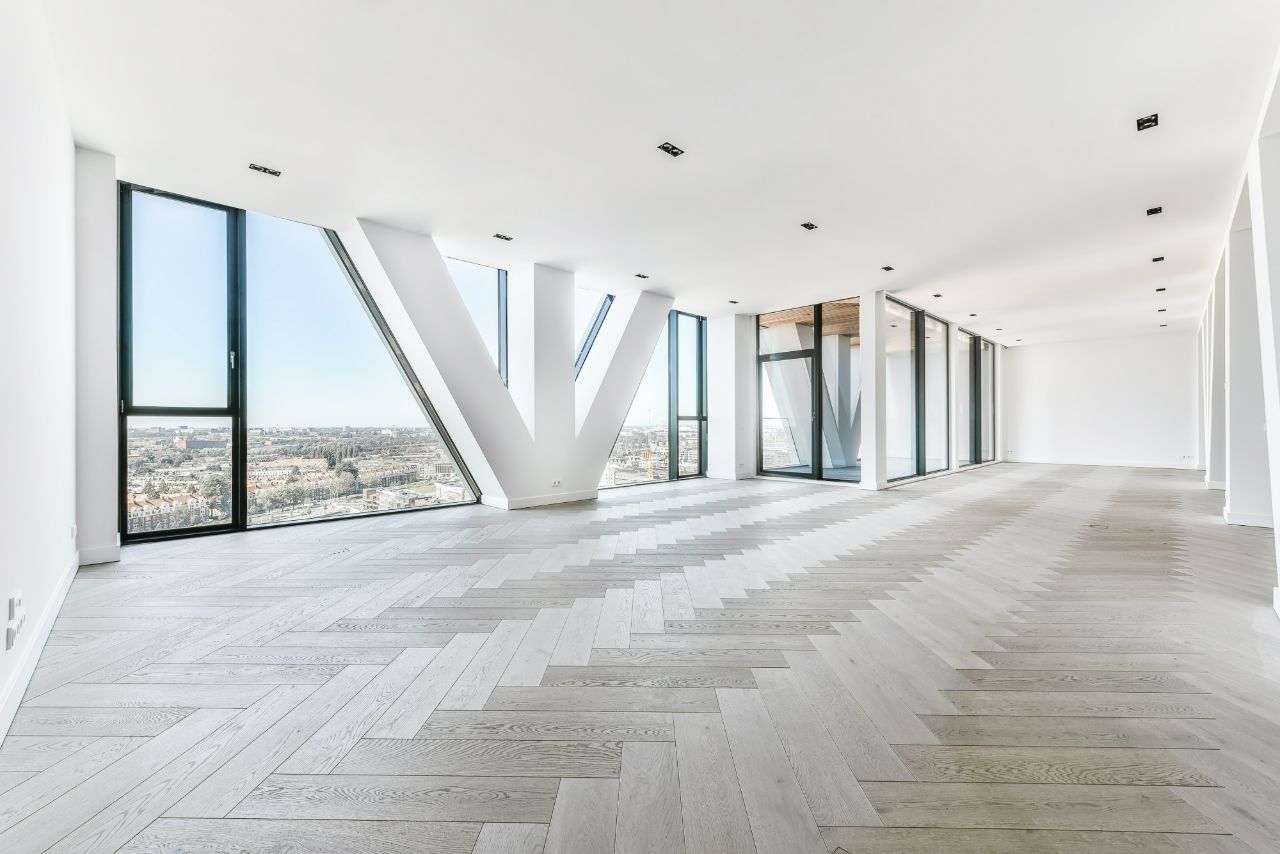
- Chevron reads more modern and graphic. In a long, narrow room, arrows pointing down the length make the room feel longer.
- Both patterns are busy. In a small room with a lot of furniture, you may see less of the pattern than you expect.
- Both work well in entry halls, living rooms and dining rooms. Hallways show off the pattern because you look straight down them.
If you are replacing an old parquet or patterned floor in a brownstone, it is worth reading refinish or replace first. Sometimes the original floor can be saved.
How should a herringbone or chevron floor be laid out?
Layout matters more with patterns than with straight planks. A crooked center line shows up across the whole room, and a pattern that ends in a thin sliver at a doorway looks like an accident. Installers usually plan the layout before any boards go down.
- Choose which way the pattern points. Most people run the points along the longest dimension of the room, or toward the main view or entry.
- Find a center line. The installer usually snaps a line down the middle of the room, or lines it up with a focal point such as a fireplace, window or hallway.
- Plan the edges. Look at where the pattern meets walls, doorways and thresholds, and shift the center line if a key doorway would get an awkward cut.
- Decide on a border. Some patterned floors are framed with one or two rows of straight boards at the walls. It is optional, but it gives the edges a finished look and can hide out-of-square walls.
- Plan transitions. Decide how the pattern stops at doorways and where it meets other floors.
Old buildings are rarely square. Walls in many prewar apartments and row houses are a little out of line, and a straight pattern makes that more visible. A border, or a careful choice of center line, helps.
Many herringbone and chevron products come in left and right boards and must be installed in a specific sequence. Follow the specific product's installation instructions for layout, fastening and adhesive.
Why does a patterned floor need more material?
Every row of a herringbone or chevron floor ends in a cut at the wall, and those cuts are angled. Many offcuts are too small or the wrong shape to use elsewhere. That means more waste than a straight plank floor in the same room.
Rooms with many corners, doorways, closets or bays add more cuts. A border uses its own boards on top of the pattern. Your installer should set the overage based on the room and the pattern. Our guide on how much flooring to order explains how to measure and why running short of a patterned product causes real problems.
Order enough at the start, from the same production run if you can. Color can vary between runs, and in a pattern the boards sit right next to each other, so a mismatch is easy to see.
Why does herringbone cost more to install?
We do not publish prices, but the reasons labor is higher for patterns are easy to list.
- Layout and planning time before installation starts.
- More cuts, and most of them are angled cuts at every wall.
- Short boards mean many more pieces to place per room.
- Many patterned floors are glued or nailed rather than floated, which adds time and adhesive.
- Borders, feature strips and careful thresholds take extra work.
- A flat subfloor matters even more, because short boards follow small dips and humps.
Ask for a quote on the material and talk to your installer about labor for the specific room. If you are a contractor or designer pricing a project, our trade page has a sample and project quote form.
Engineered wood or vinyl for herringbone?
Patterned floors are made in solid wood, engineered wood and vinyl. The herringbone and chevron products in our online catalog are engineered wood. Vinyl herringbone exists in the market, and we can talk through options if you need a vinyl pattern.
| Engineered herringbone | Vinyl (LVP) herringbone | |
|---|---|---|
| Surface | Real wood veneer over a layered core | Printed wood-look layer under a wear layer |
| Look up close | Real grain, texture and natural variation | Varies by product; repeats can show in a busy pattern |
| Water | Wipe spills promptly; not for standing water | Many products are rated waterproof; seams and subfloor still matter |
| Refinishing | Depends on wear layer thickness; some can be sanded | Cannot be sanded or refinished |
| Typical installation | Often glued or nailed; check the product | Often click and float, or glue-down; check the product |
| Over concrete | Many products can be glued to concrete per instructions | Usually straightforward; check flatness and moisture |
Engineered wood is usually the first choice when you want the look and feel of a real patterned floor. Its layered core helps short boards stay stable through dry winters and humid summers, which matters in buildings with steam heat. You can compare options in engineered wood, or see a herringbone like Craftsman Artisan Herringbone.
What should you check in an NYC building?
- Most apartment buildings sit on concrete slabs. Patterned engineered floors are often glued down, so check the slab's flatness and moisture before you choose.
- Many co-ops and condos require board approval and a sound-control underlayment with specific IIC and STC ratings. Make sure the patterned product and the installation method are compatible with the underlayment your building requires. See our co-op and condo sound rules guide.
- In row houses with wood joists, the subfloor may need leveling before short boards will sit flat.
Common questions
Is herringbone or chevron more expensive?
Both cost more to install than straight planks because of layout, cuts and waste. Chevron boards need precise factory-cut angles, and herringbone often needs more pieces and cuts. Ask us for a quote on the specific product and room.
Can herringbone flooring be floated?
Some click-together products can be floated, but many herringbone and chevron floors are glued or nailed. It depends on the product, so follow its installation instructions.
Which direction should herringbone run?
Most people run the points along the longest dimension of the room or toward the main view or entry. Your installer will also look at doorways, focal points and how the pattern meets the walls.
Does herringbone make a small room look bigger?
It can make a room feel more interesting, and points running along the length can make it feel longer. In a very small room the pattern can feel busy, so look at a large sample in the space.
Can I run herringbone through my whole apartment?
Yes, many people do, but plan the center line and transitions carefully so the pattern lines up from room to room. Check your building's rules and the product's instructions for long runs and doorways.
Floors this guide covers
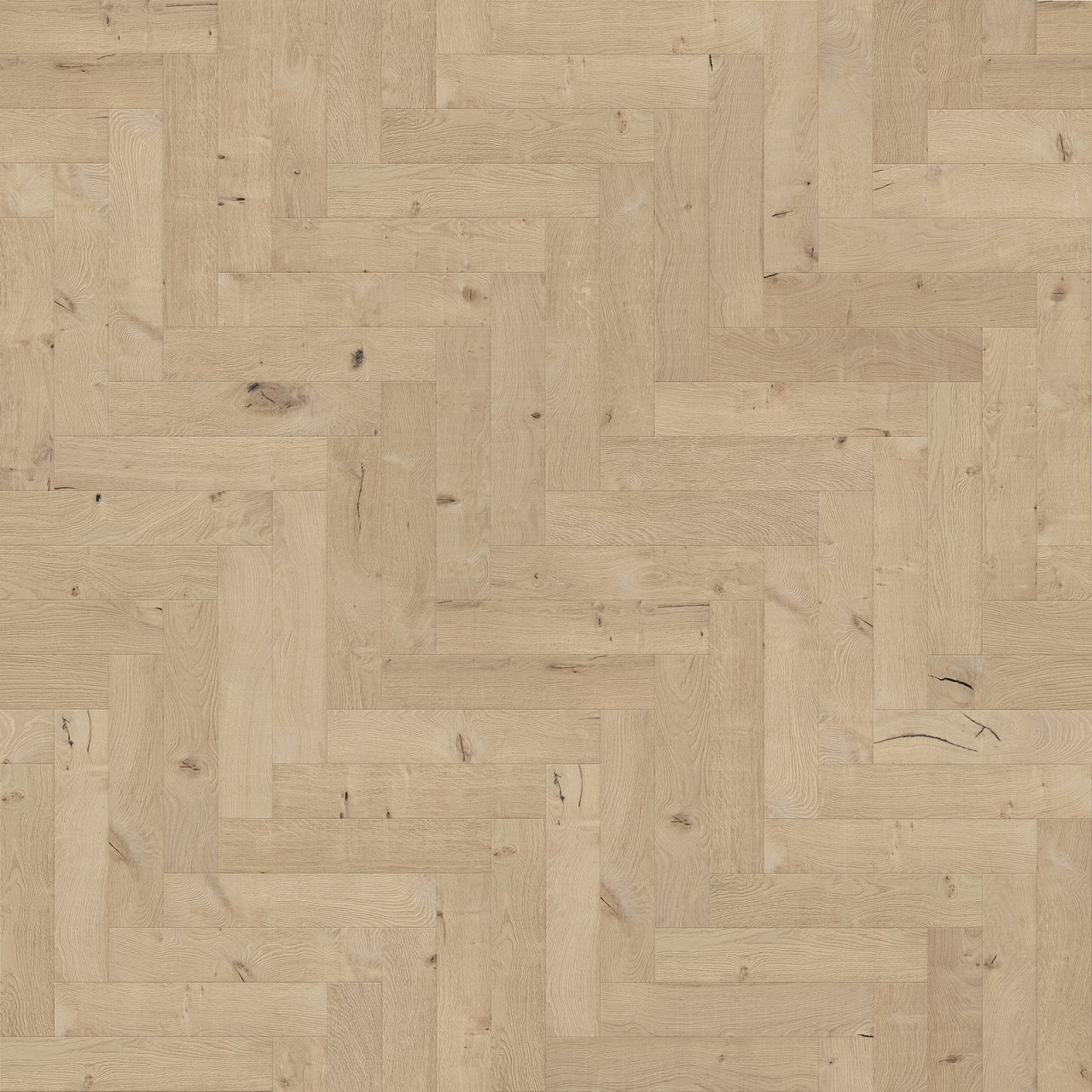
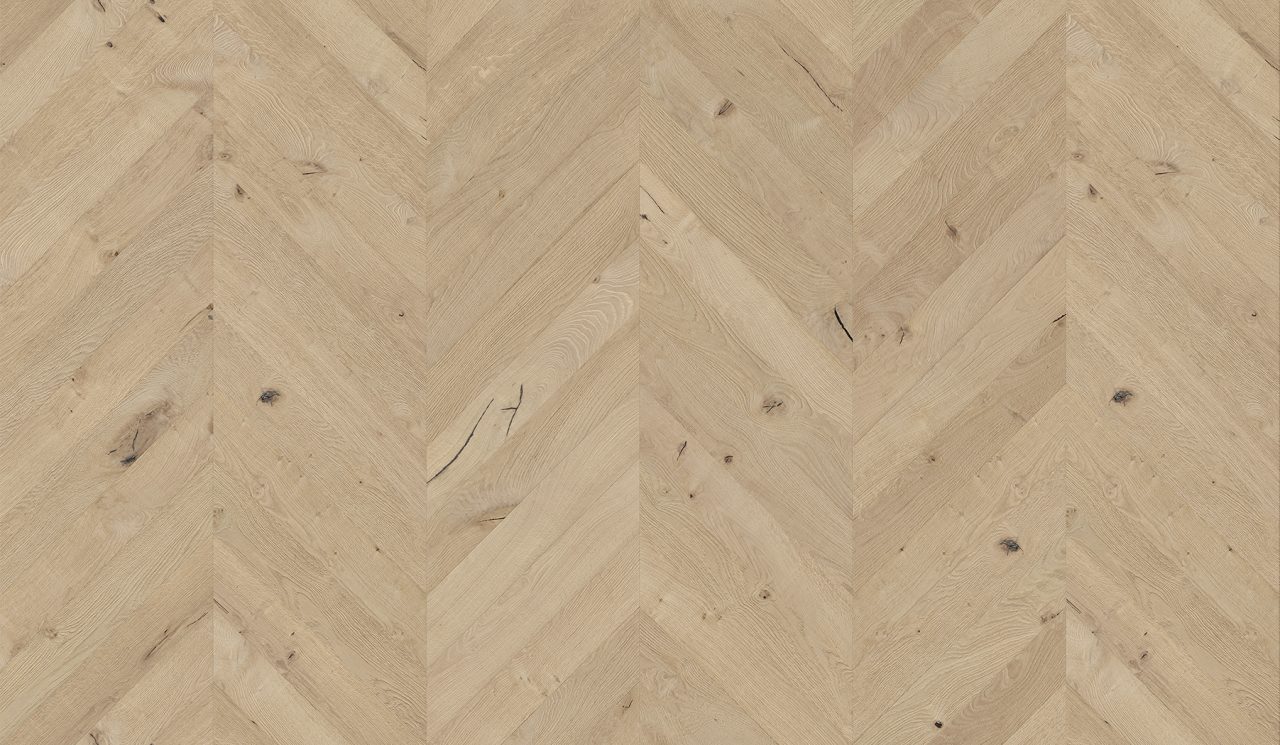
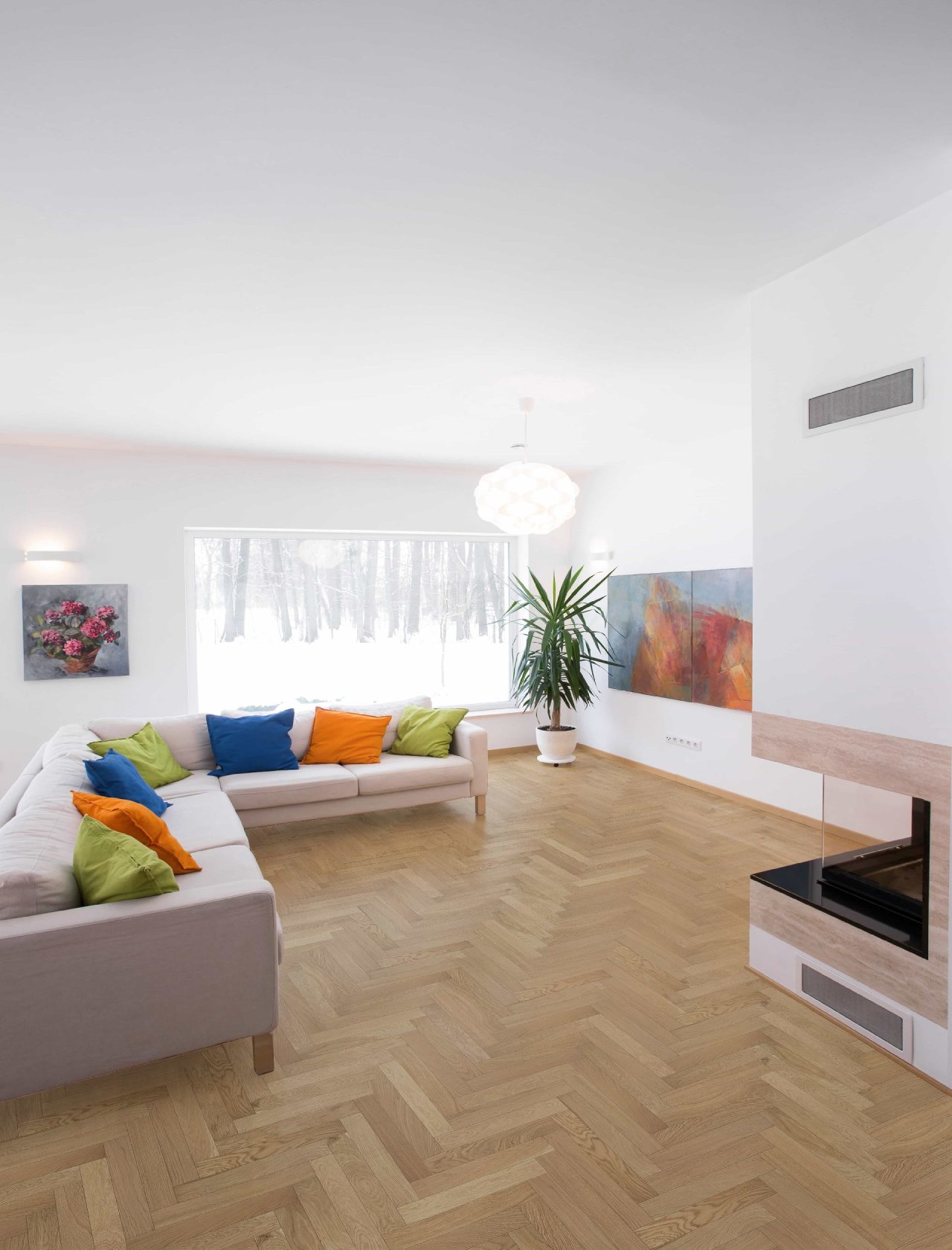
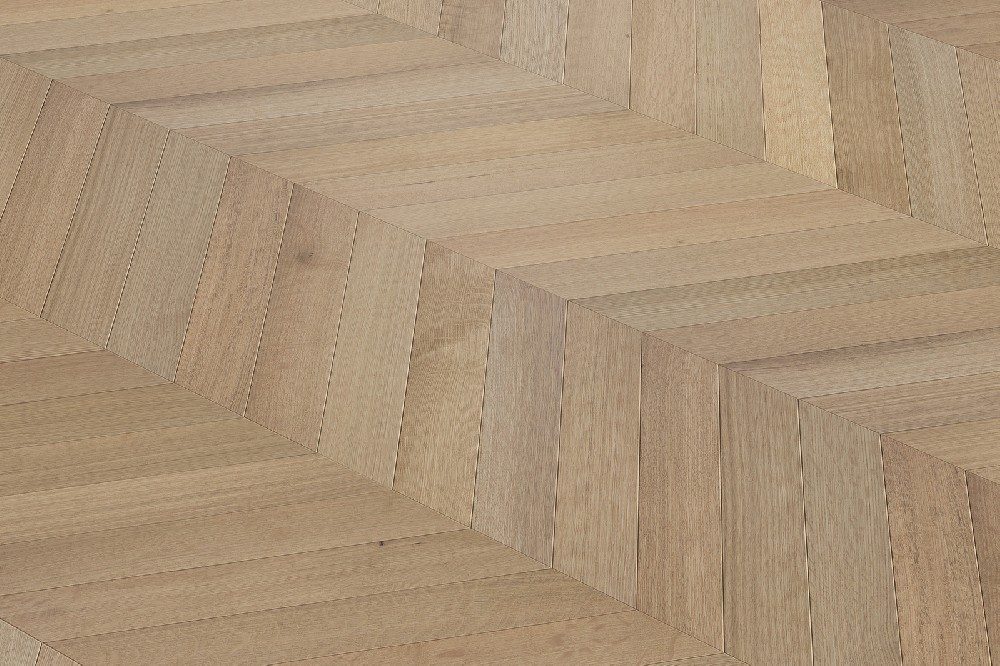


Examples from the current catalog in these material families; specifications on each product page are as listed by the manufacturer.
Related guides
All guides